 24/7 Customer
Support
24/7 Customer
Support Free Express Shipping 24/7 Customer
Support Free Express Shipping
Free Express Shipping 24/7 Customer
Support Free Express Shipping
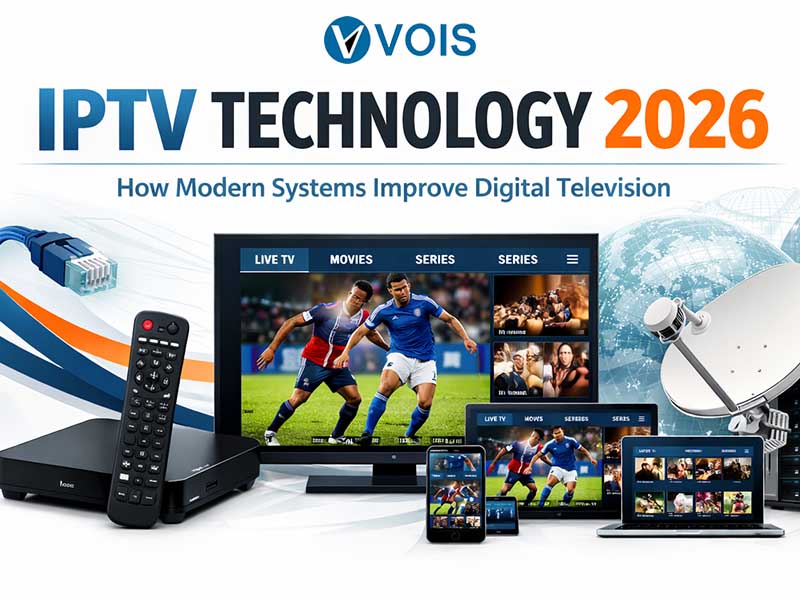
Television used to be simple hardware. You plugged a coaxial cable into a box. That box sat on a shelf. It did one thing. Things changed. IPTV technology turned that hardware into software. We now send video data over the internet just like email or web pages. By 2026 this shift creates massive efficiency.
Old cables sent signals one way. You received what they sent. Modern digital television systems work differently. They talk back. They check your internet speed constantly. They analyze what you watch. They fix problems before you see them. This shift is not just about watching shows. It is about how those shows get to you. The infrastructure behind the screen matters more than the screen itself.
Experience smooth streaming with 15,000+ HD channels and a massive VOD library. No commitment, no payment required. Start your free trial today and see why Canadians trust Vois IPTV.
Start 72-Hour Free TrialWe used to rely on hard drives inside set-top boxes. You had limited space. If the box broke you lost your recordings. That problem is gone. Cloud-based DVR solutions store your shows on massive servers. You can record as much as you want. You can watch those recordings anywhere. The files sit safe in a data center. No physical box failure can delete your library.
Storage is only half the battle. Delivery matters too. Sending video across the world takes time. Time creates lag. The future of IPTV technology fixes this with edge computing. We call this a content delivery network (CDN) for IPTV.
Providers put servers in your specific city or neighborhood. They copy popular movies and shows to these local servers. When you press play the video comes from down the street instead of across the ocean. The video starts instantly. The data travels a shorter distance. This reduces the load on the main internet backbone. It makes the entire system faster for everyone.
Everyone hates buffering. The spinning wheel stops the action. Modern systems stop this with smart adjustments. Here is adaptive bitrate streaming explained simply. The system watches your internet speed constantly. If your family starts downloading a big file your speed drops. The stream sees this drop instantly. It lowers the picture quality just enough to keep the video playing smoothly. You might not even notice the change. The audio keeps going. The video keeps moving. The system prioritizes continuity over perfection.
Live news present a different challenge. Satellite TV used to be faster than internet TV. You would hear your neighbor cheer ten seconds before you saw the goal. Old internet protocols were slow. They needed time to package the video. Low latency streaming protocols like SRT fix this. They chop the video into smaller pieces. They send these pieces faster. This results in significant IPTV latency reduction. Now you see the goal when it happens. The delay drops to less than a second.
High resolution video is huge. Sending 4K video takes a lot of data. We use artificial intelligence to solve this. AI-powered content delivery looks at every frame of video. It finds parts of the picture that do not change. A blue sky or a dark wall does not need much data. The AI saves space there. It uses that saved space for the action scenes. The result is a clear picture that uses less internet.
We also use better tools to pack the data. This is where smart compression algorithms come in. We compare HEVC vs AV1. These are just names for how we pack video. They are much better than older methods. They make the file smaller without making the picture blurry.
This efficiency lowers 4K IPTV bandwidth requirements. You used to need incredibly fast internet for 4K. Now you can watch sharp 4K video on average connections. The code does the heavy lifting. The network just carries the package.
You do not sit on the couch for everything anymore. You watch on phones or tablets. Multi-device synchronization keeps everything connected. You pause a movie in the living room. You open your phone on the bus. The app knows exactly where you stopped. It starts from that second. The system treats your household as one user regardless of the screen.
This highlights the main difference between IPTV vs. digital cable architecture. Cable tied you to a wall outlet. It tied you to a specific room. IPTV ties you to your account. Your account lives in the cloud. The screen you use does not matter. The experience stays the same. You get your content on your terms.
Experience smooth streaming with 15,000+ HD channels and a massive VOD library. No commitment, no payment required. Start your free trial today and see why Canadians trust Vois IPTV.
Start 72-Hour Free TrialTV is software now. The wires matter less than the code running on them. IPTV technology keeps getting smarter. It adapts to you. It saves bandwidth. It delivers higher quality. Understanding these systems helps you choose the right setup. Look for providers using these modern tools. You will get a better viewing experience.
How does AI improve IPTV streaming
AI predicts network traffic jams. It reroutes data to keep streams clear. It also adjusts video quality automatically to prevent buffering before it starts.
What is the advantage of cloud DVR over physical boxes
You get unlimited storage space. You can access recordings from any device with a screen. You never lose shows if a piece of hardware breaks.
Will 4K IPTV work on standard internet speeds
Yes it works. Efficient coding standards like AV1 make 4K files smaller. They stream easily on average connections without using all your data.
